
About Ephesus Ancient City
About Ephesus Ancient City
Ephesus Ancient City started as a simple settlement in 8600 BC. Over centuries, it grew to become one of the most important world capitals of its time.
The city flourished thanks to its location in Selcuk, Izmir, on the fertile lands of Anatolia, its position on trade routes, and its harbor connecting East and West. It saw its golden age after joining the Roman Empire in 129 BC. It became the capital of the Asian Province. In this period (2nd-1st century BC), Ephesus turned into one of the largest metropolises of its era with a population exceeding 200,000.
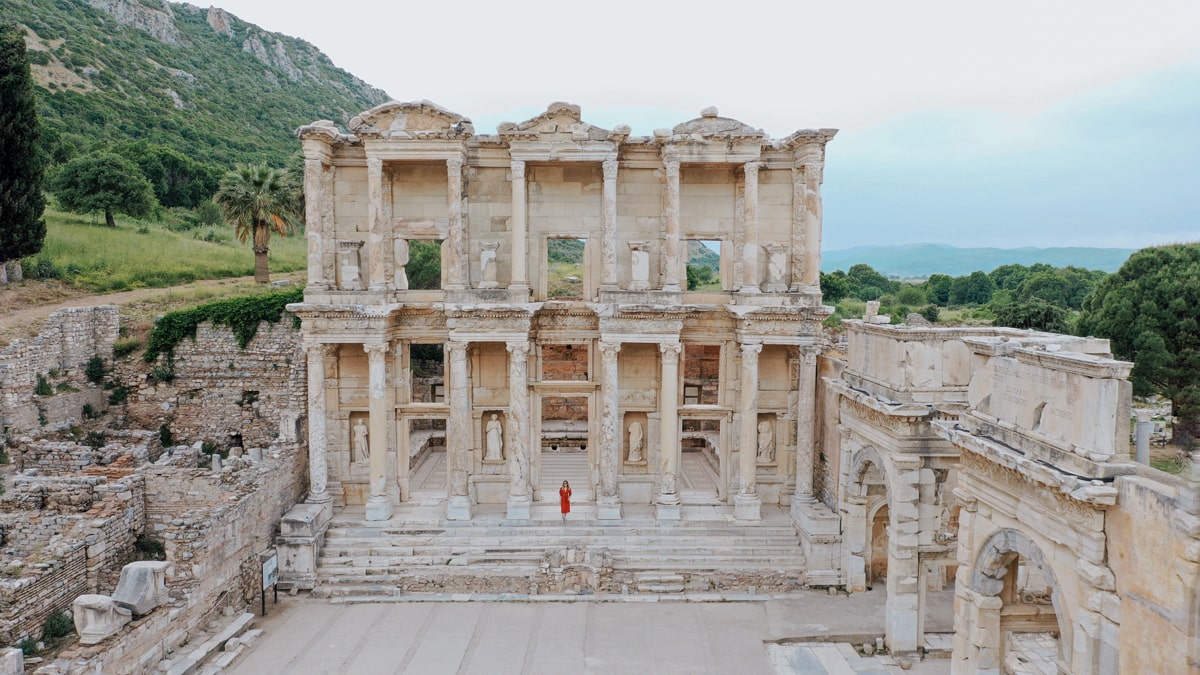
The wealth accumulated in the city was reflected in its architecture. It is possible to guess how impressive the city was from the magnificence of the re-erected Celsus Library. It is said to have rivaled Rome.
The city's most famous structure for its beauty was the Temple of Artemis, one of the 7 Wonders of the World, built by the Lydian King Croesus in 550 BC before the Romans took over. Unfortunately, only a few stones and a reconstructed column remain today. It is thought that Artemis, a Greek goddess, was a continuation of Anatolia's fertility goddess Cybele, synthesized into Greek culture.
Ephesus was home to people of many religions and races. Trusting the atmosphere of tolerance here, Saint John brought Virgin Mary, whom Jesus had entrusted to him, here around 36 AD for her safety after Jesus' crucifixion in Jerusalem. Today, the house where Virgin Mary lived is a pilgrimage site visited by Christians from all over the world.
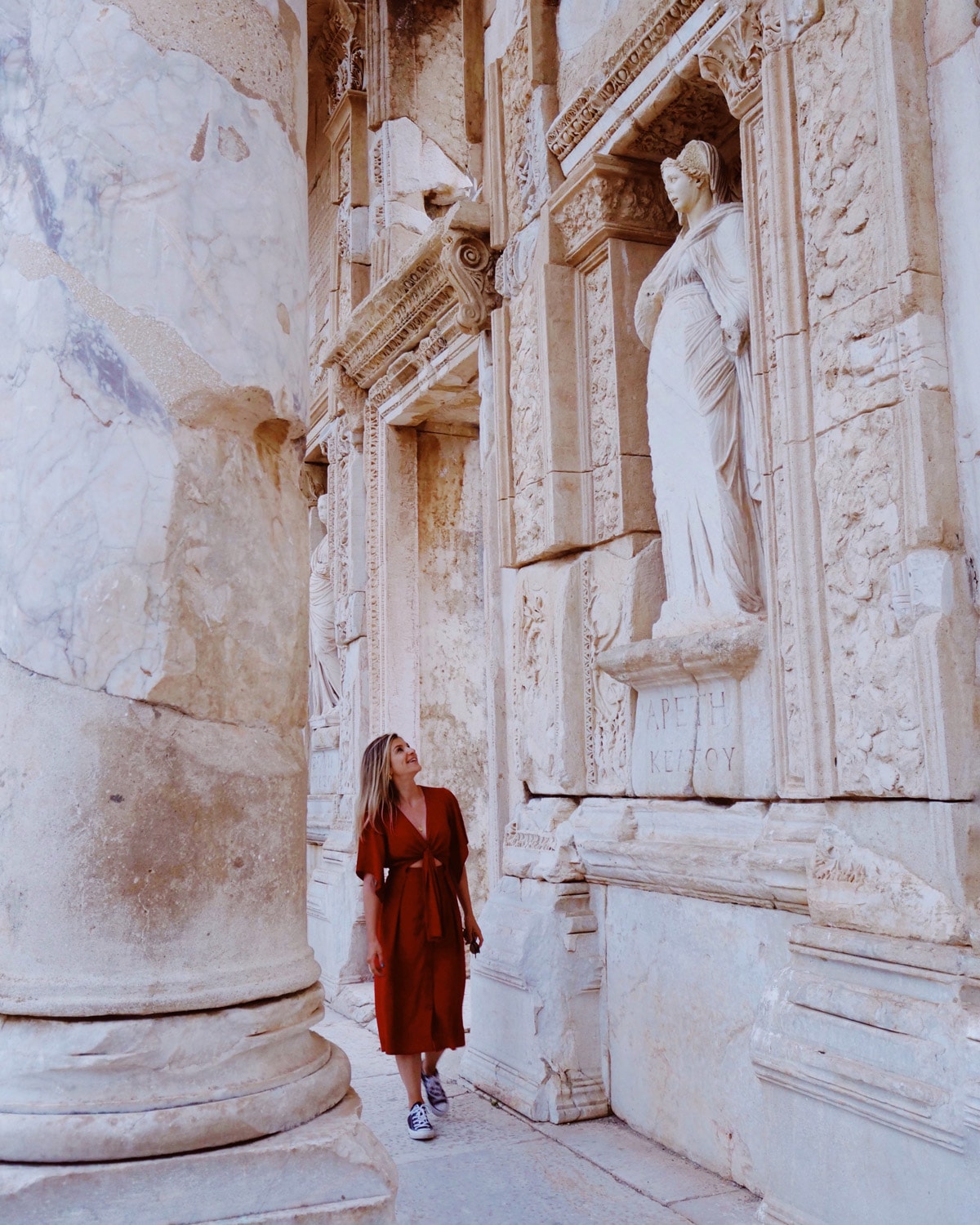
Celsus Library
Saint Paul worked hard to spread Christianity in Ephesus and gave one of his famous sermons here. Thanks to converting many people, Ephesus played a key role in the spread of the religion. Christianity became Rome's official religion in 313. By 380, paganism was seemingly over as Catholic belief was imposed on the city's inhabitants.
Ephesus was looted, hit by earthquakes, and changed hands many times but always continued. However, it could not resist what the Little Meander River prepared. The river filling the harbor with alluvium caused the end of sea trade and the city's decline. Constantinople becoming the new capital of the Eastern Roman Empire further weakened the already struggling city. Its economy now relied on being a pilgrimage center. Destructive earthquakes in the 6th and 7th centuries made things worse. When the people fleeing Arab invasions established other settlements and emptied the city, Ephesus could never return to its old days.
The settlement, which could not turn its luck in the Seljuk and Ottoman periods, is now spending its busiest times since the Roman years thanks to tourist buses arriving at all hours. Below you will find our suggestions and some useful information for your trip to Ephesus Ancient City.
History of Ephesus Ancient City
That noble city which dates back to 6000 BC and was used as an active settlement from the Hellenistic period to Roman, Byzantine, Anatolian Beyliks, and Ottoman periods; Ephesus.
As an example of superior urban planning for centuries, with its status as a major trade center due to being an important port city, as a cradle of cultures hosting civilizations with rich cultures for thousands of years, and accepted as a pilgrimage center for Christianity; it would not be wrong to say that Ephesus is not just a part of history but history itself.
Legend of Amazon Women Founding
It is rumored that Ephesus was first founded by female warriors known as Amazons in history and its name comes from Apasas, a city of the Arzawa (Mother Goddess City) Kingdom. Although there is no clear information about this period, it is thought that indigenous people lived in this region for many years.
Ephesus Becoming a World Capital: Hellenistic and Roman Period
The region, thought to be a small living center before, began to gain importance and strengthen with the Athenian Prince Androklos. At the entrance of the Temple of Hadrian in Ephesus Ancient City, the following sentences describing the founding of Ephesus are found;
Androklos, the brave son of King Kodros of Athens, wants to explore the opposite shore of the Aegean. First, he consults the oracles of the Temple of Apollo in Delphi. The oracles tell him that he will establish a city where a fish and a pig point. While Androklos thinks about the meaning of these words, he sets sail to the dark blue waters of the Aegean... When they arrive at the bay at the mouth of the Kaystros (Little Meander) River, they decide to go ashore. While cooking the fish they caught by lighting a fire, a wild boar comes out of the bushes, grabs the fish and runs away. Here the prophecy has come true. They decide to establish a city here...
The growth process of Ephesus, which started with Androklos, reached its peak in 129 BC when the King of Pergamon Attalus left the region to the Romans as a legacy. Leaving a whole country as a legacy is quite an interesting situation, but fortunately, it worked for Ephesus. According to historians, after this date, Ephesus became the most important trade center in Asia. Also, the philosophy school opened here played a major role in its becoming an important center.
With the emergence of Christianity, the city first became a religious center with Saint Paul, one of the important names of the Bible, staying here for a while and giving sermons, and later with the arrival of Saint John and Virgin Mary. Living its golden age since this date, Ephesus started to change hands frequently and draw an unstable momentum after a while. And finally, in 1304, it passed into the hands of the Turks.
Beyliks and Ottoman Period
Although prosperity continued for 98 years in Ephesus, which passed to Turkish Beyliks as of 1304, it suffered great destruction in 1402 due to Mongol attacks. In 1425, the Ottomans conquered the city. After this point, Ephesus lost its importance rapidly and when we came to the 20th century, the sands carried by the Meander River expanded the plain. Ephesus, a coastal city, remained about 5 km away from the sea.
Information for Visiting Ephesus Ancient City
When to Come?
We think the best time for Ephesus, which you can visit comfortably all year round, is May due to nature turning green.
Most visitors come in summer, but visiting Ephesus in Izmir heat can be challenging. If you are coming in summer, it is best to be here when the gates first open. You will be comfortable in terms of temperature and you can take photos comfortably before crowds arrive. Make sure to have water, sunscreen and a hat in your bag.
How Long Does It Take to Tour Ephesus?
You should allocate at least 2-3 hours here. It might sound like a lot, but remember you are visiting a metropolis. The guided walking tour also takes 2 hours. If you are going to visit both Ephesus Ancient City and other important points such as the House of Virgin Mary and the Temple of Artemis nearby, the tour takes 4-5 hours.
Is There an Entrance Fee for Ephesus Ancient City?
Yes. There is no discount either.
Is Museum Pass Valid in Ephesus Ancient City?
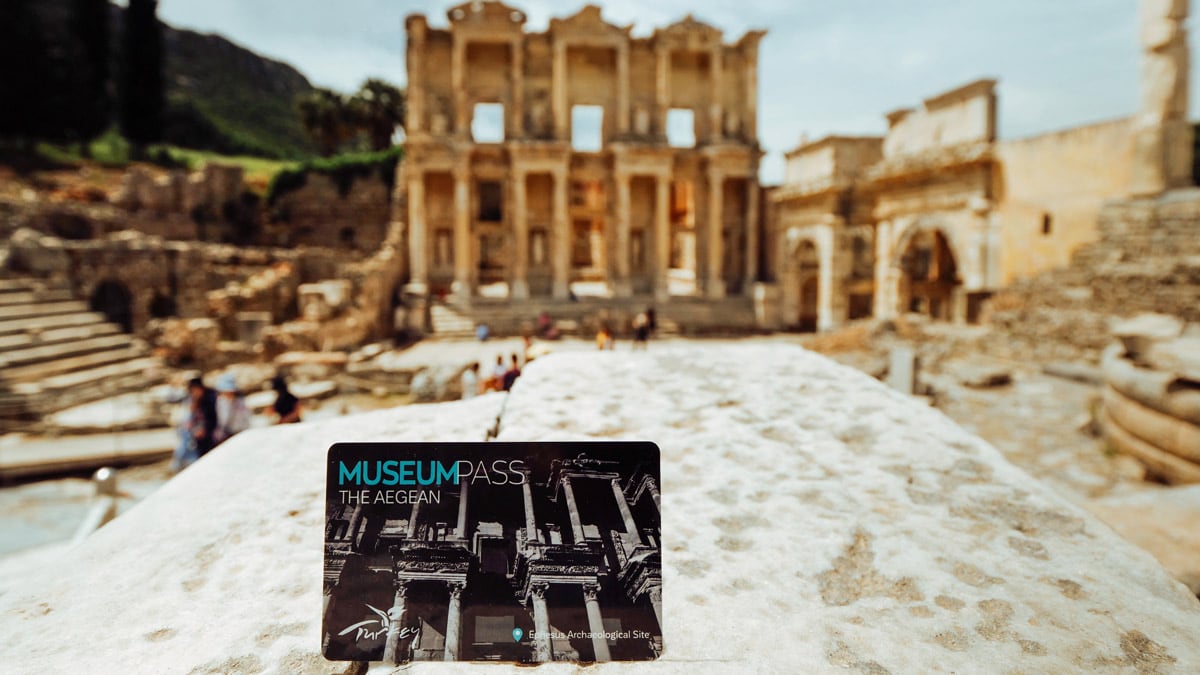
Yes. Museum Pass holders can visit Ephesus Ancient City for free twice a year. If you don't have a Museum Pass, there is also a sales point here where you can get one immediately. It is much more affordable than buying tickets every time. Also, Museum Pass is valid for entrance to Terrace Houses, St. Jean Ruins, and Ephesus Museum.
Ephesus Ancient City Visiting Hours
Summer Period: 1 April – 1 October Opening Time: 08:00 Closing Time: 19:00
Winter Period: 1 October – 1 April Opening Time: 08:30 Closing Time: 18:00
Open every day. Closed until noon only on the first day of religious holidays.
Is There Parking at Ephesus Ancient City?
For those coming here by their own vehicle, there is paid parking available at the main entrance.
What's Inside Ephesus Ancient City
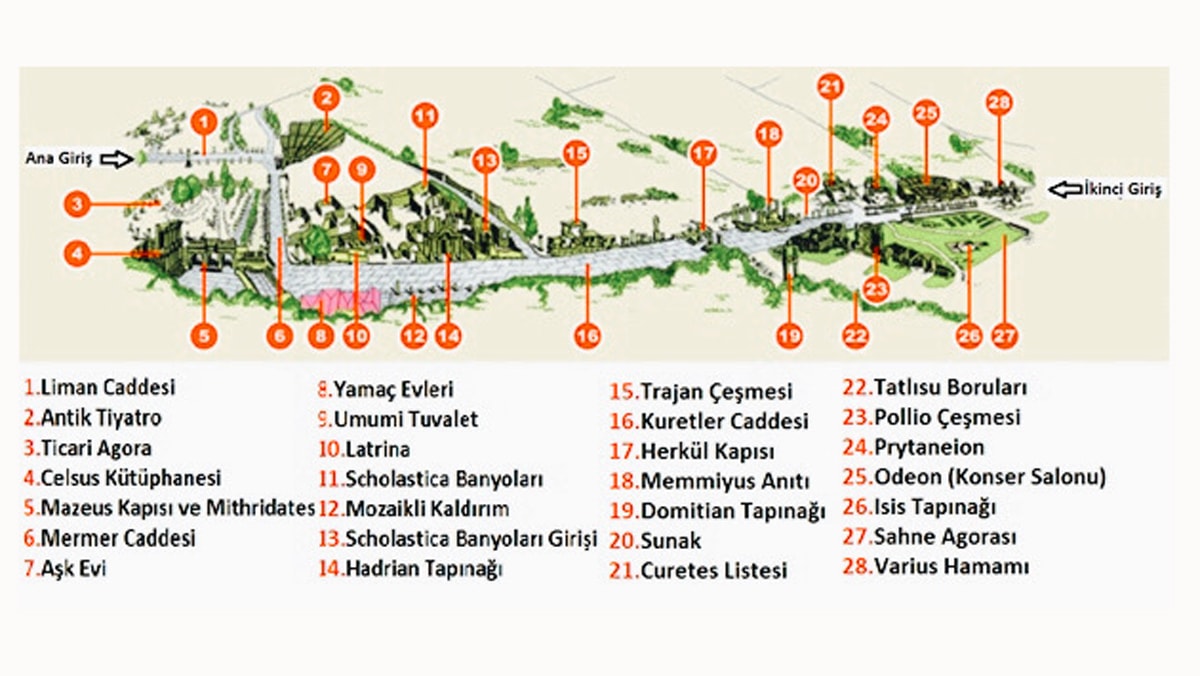
Ephesus is of course a priceless treasure with every inch, but there are structures in Ephesus that stand out and it would be a shame to visit without knowing a little about them.
Harbour Street
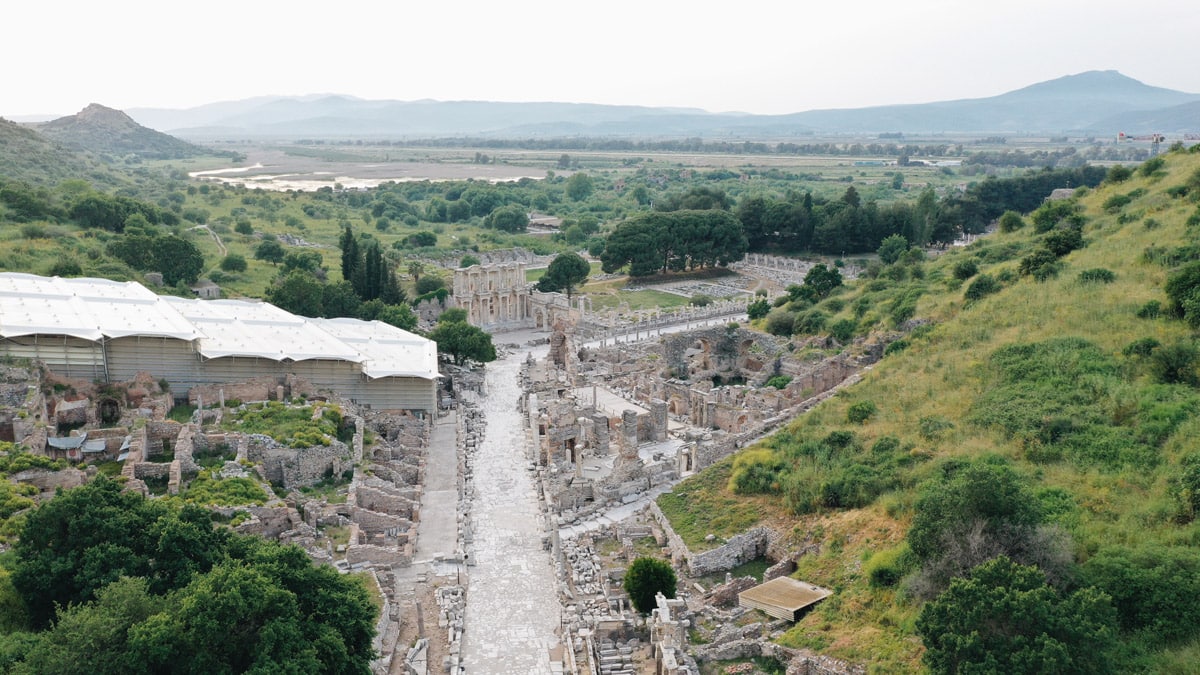
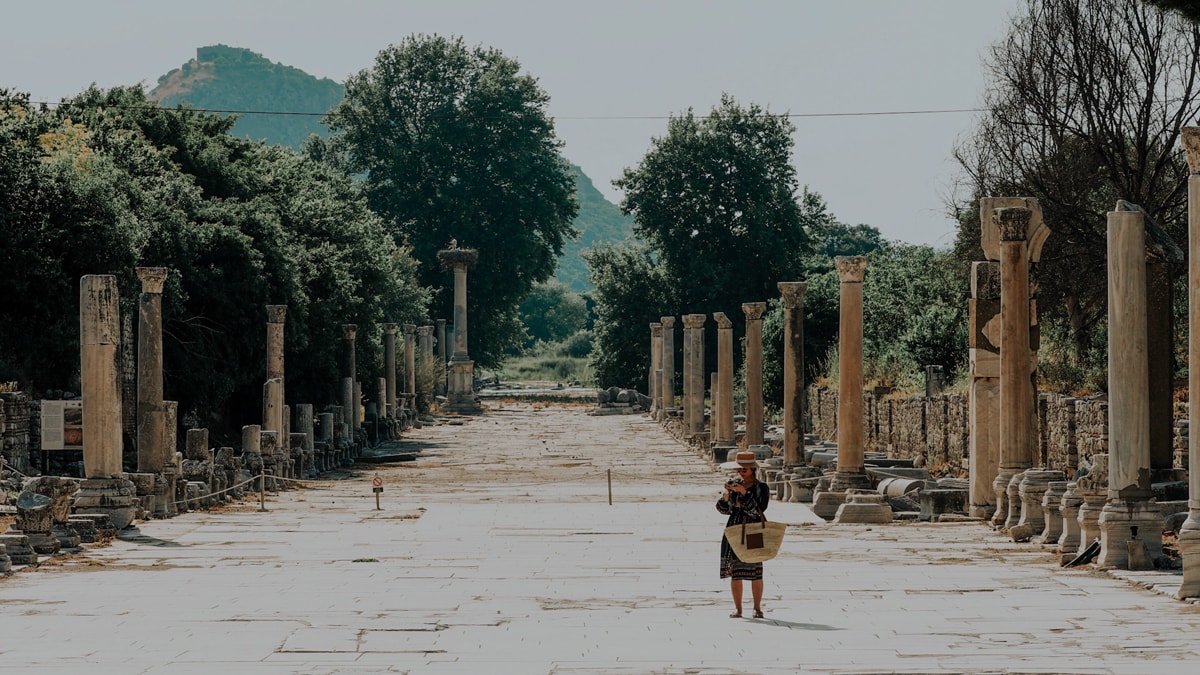
Arkadiane Street, or Harbour Street, is the longest street of Ephesus Ancient City. It connects the Odeon and the Ancient Harbour. Both sides of the street are decorated with magnificent columns. Kings coming to the city were welcomed on this street back in time, and religious ceremonies were held on this road.
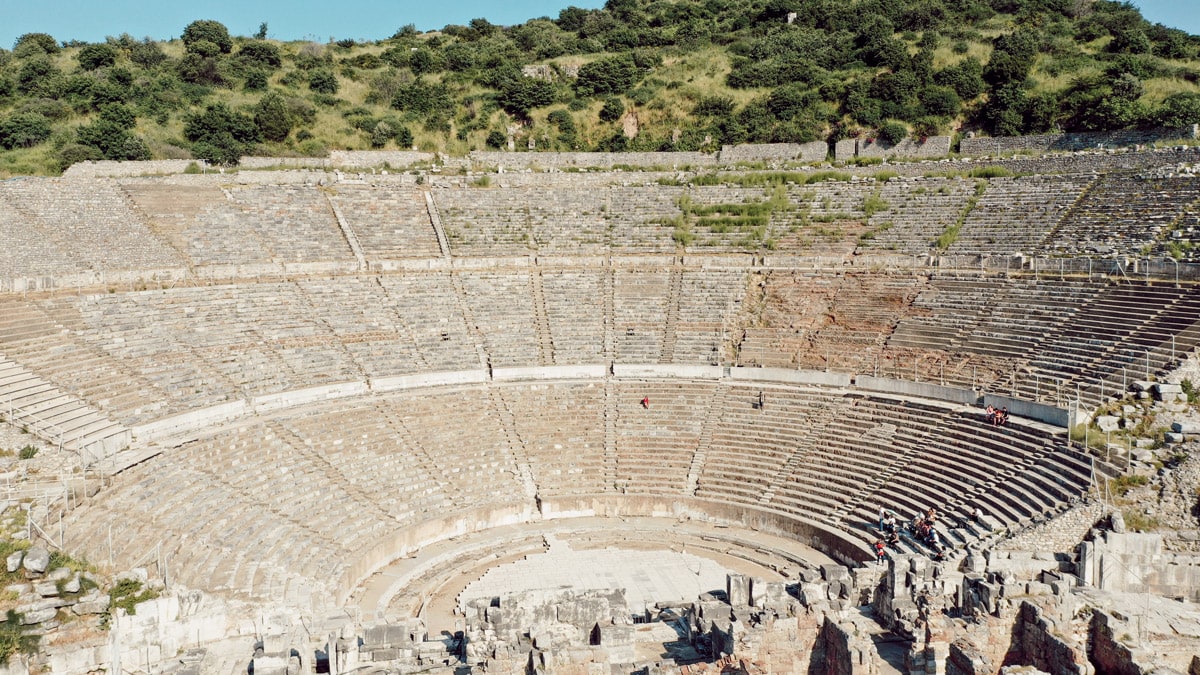
If you think the red dot in the photo is you, you realize how huge it is
Ephesus Ancient Theater
This theater, which has the feature of being the largest open-air theater of the ancient period, has a capacity of exactly 24,000 people. Unfortunately, the stage of the theater is destroyed, but the seating areas are in very good condition. Apart from being the largest theater, this theater is also a very important monument for Christianity as it is the place where St. Paul's sermons took place.
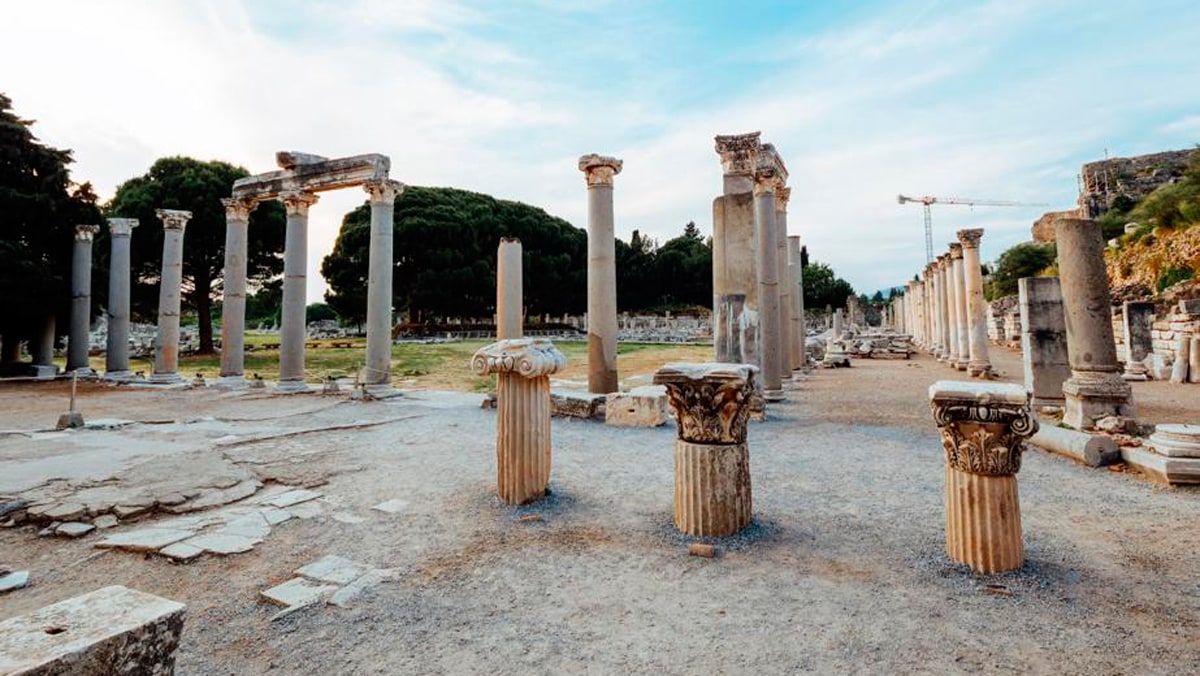
Commercial Agora
The square located right next to the Celsus Library is the Agora, the most important trade and culture center and market place of the city. The Agora, which has entrances from 3 gates in total, was established in the 3rd century BC during the reign of Emperor Augustus. The Agora was damaged by a major earthquake in the 4th century AD and became unusable.
Temple of Serapis
The Temple of Serapis, located behind the Celsus Library and thought to be built between 138-192 AD, is one of the interesting structures of Ephesus. Serapis is an Egyptian God. The temple made of Egyptian granite is thought to be dedicated to people belonging to the Serapis religion. The temple was converted into a church during the Christian period, but inscriptions found in excavations here revealed that the temple was actually dedicated to Serapis.
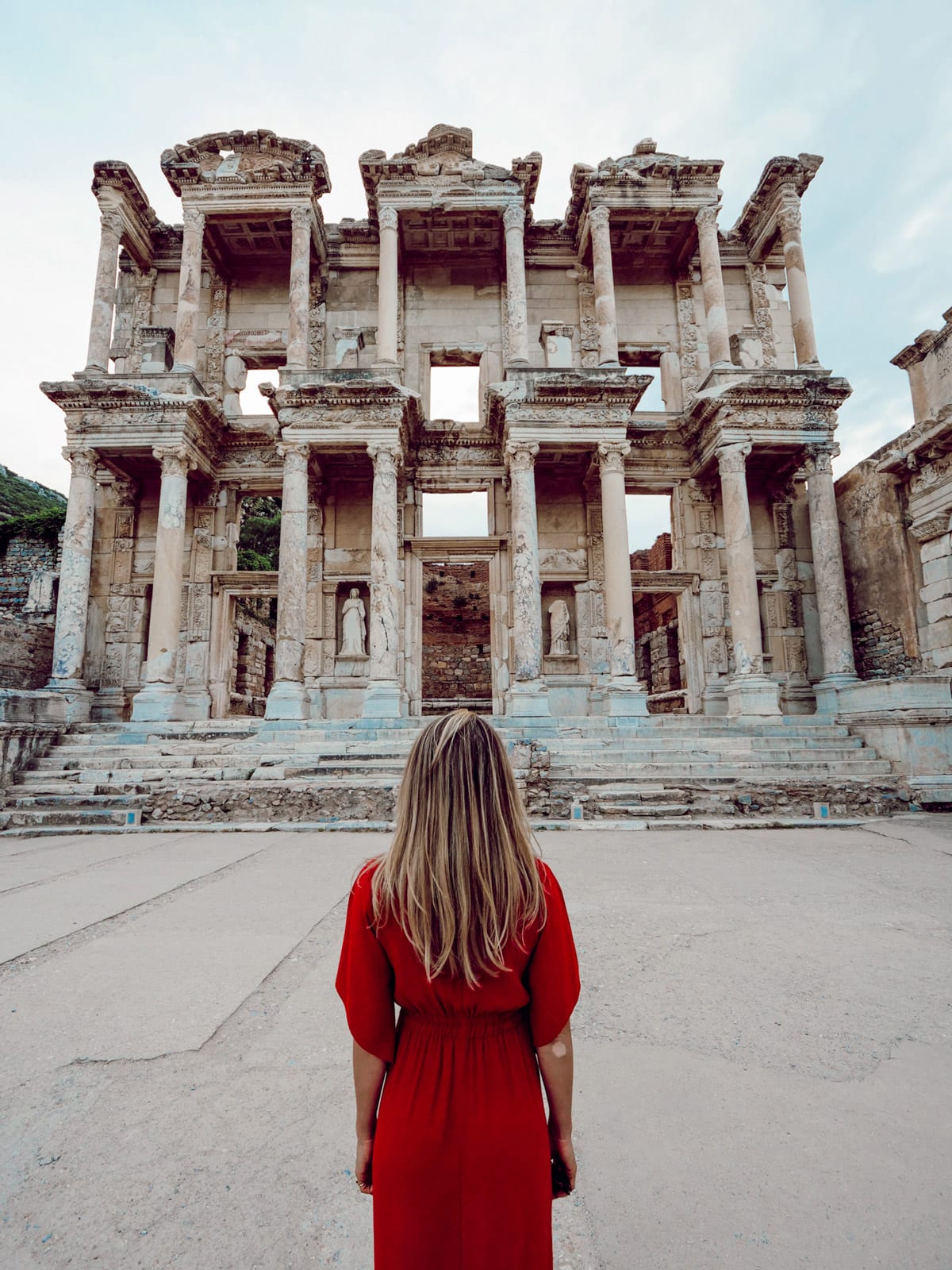
Celsus Library
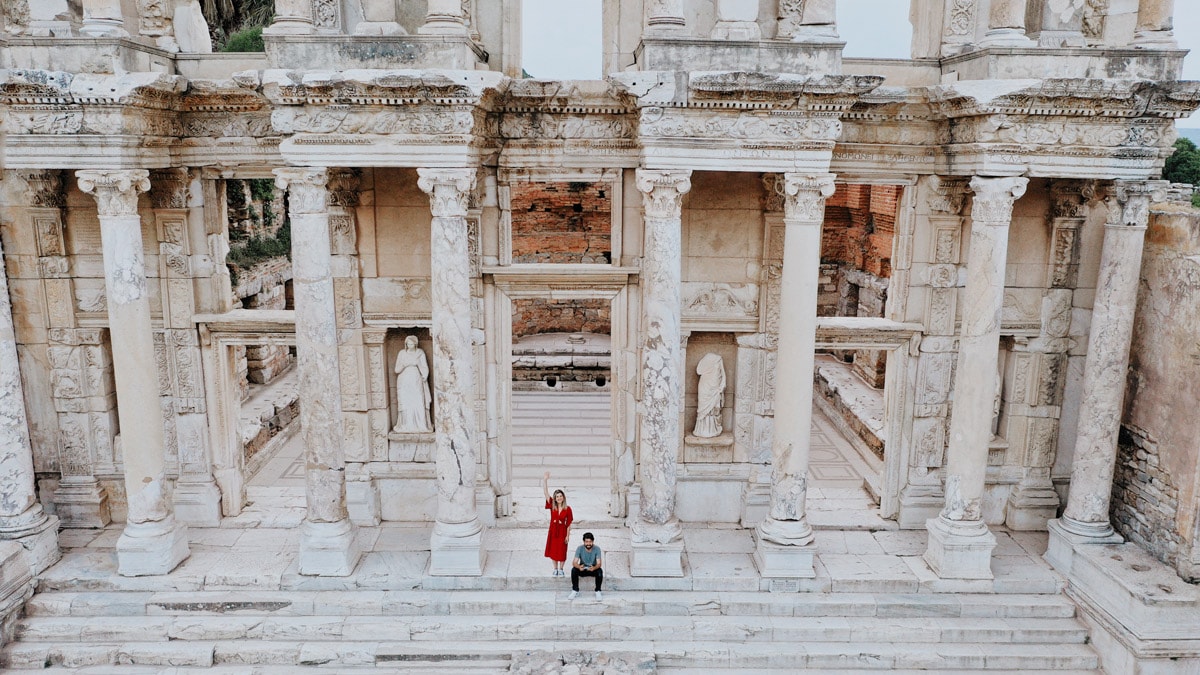
Perhaps the most beautiful structure in Ephesus. Celsus Library was built by his son in the name of Ephesus governor Celsus who died in 106 AD. Although the library looks like two stories from the outside, it is a single-story structure with a high ceiling inside.
There is a very surprising and equally funny claim about this place. There is a brothel right across the library. Considering other ancient cities, this cannot be said to be the first. However, the claim is that there is a secret passage from inside the library to this brothel. It is rumored that people of that period went to the brothel through this way without attracting attention in society or getting caught by their wives. Well, what can we say, if it's a joke it's funny, if not it's even funnier.
Gate of Mazeus and Mithridates
The Gate of Mazeus, also known as the South Gate of the Agora, is the gate that provides passage from the Celsus Library to the Commercial Agora. The gate, thought to be built in 4-3 BC, was built by being financed by two slaves named Mazaeus and Mithridates who were freed by Emperor Augustus.
Marble Street
The street extending from the Library square to the theater is called Marble Street. In the street designed suitable for the passage of cars as well, sidewalks for pedestrians were also built on both sides. The street is decorated with columns all along.
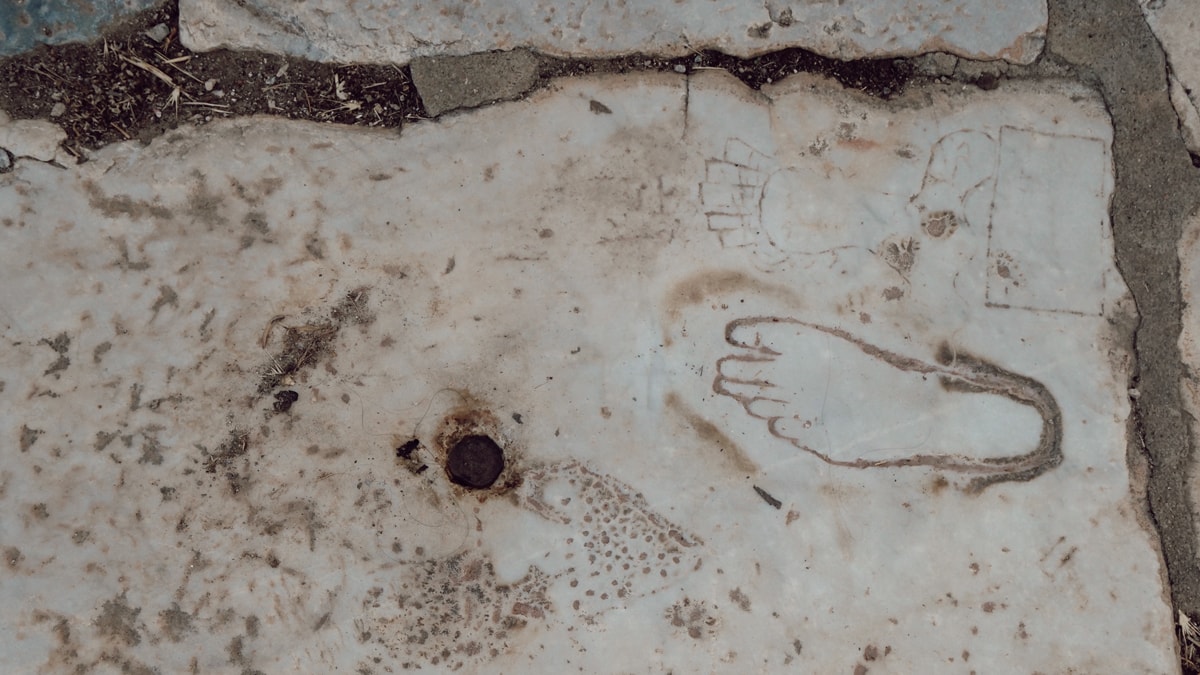
Love House
At the intersection of Curetes Street and Marble Street, there is the Love House. The Love House is the brothel of the period. It is thought that there are underground connections to the Love House from many structures in the city through secret passages. These passages have not been unearthed yet, but it is assumed that they were frequently used by Ephesian married men in time. The footprint you see in the photo probably belongs to a sex worker working at the Love House. The location of this footprint at the entrance of the Love House makes it a billboard of that time in a way.
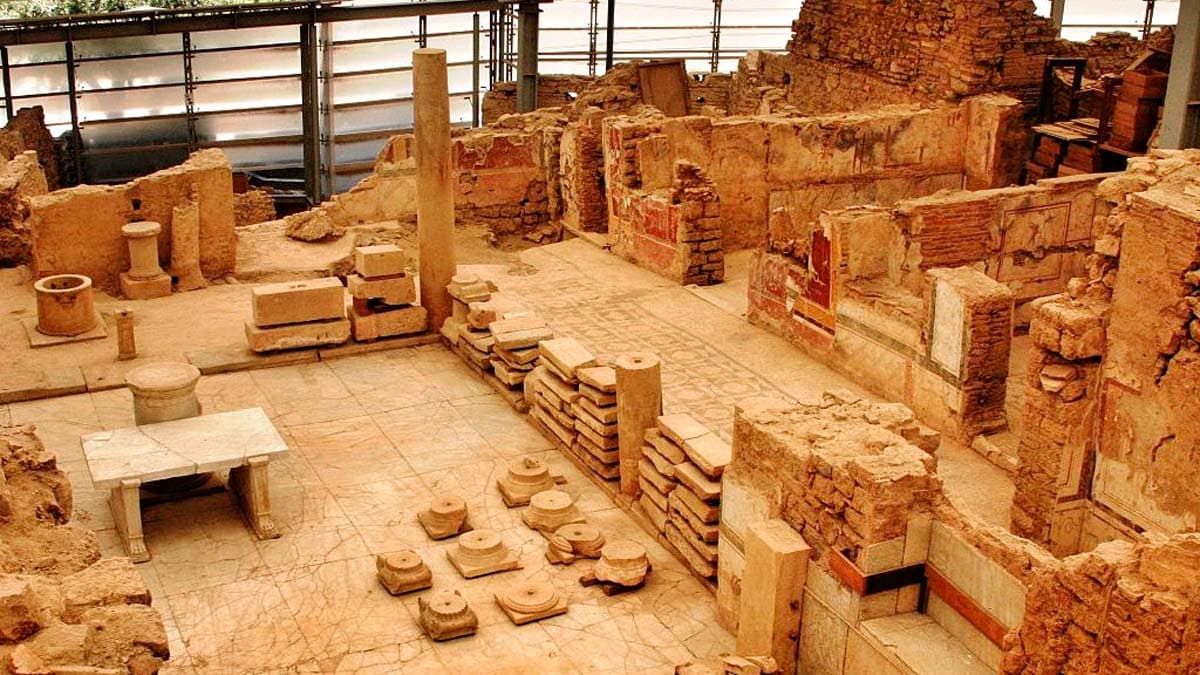
Terrace Houses
It's the turn of the site of the wealthy of Ephesus. Each of the houses built on an area of 4000 m² has a courtyard. The houses were so luxurious for the period that they were heated with an underfloor heating system. These houses, which were used until the city was abandoned, are still in very good condition for visiting.
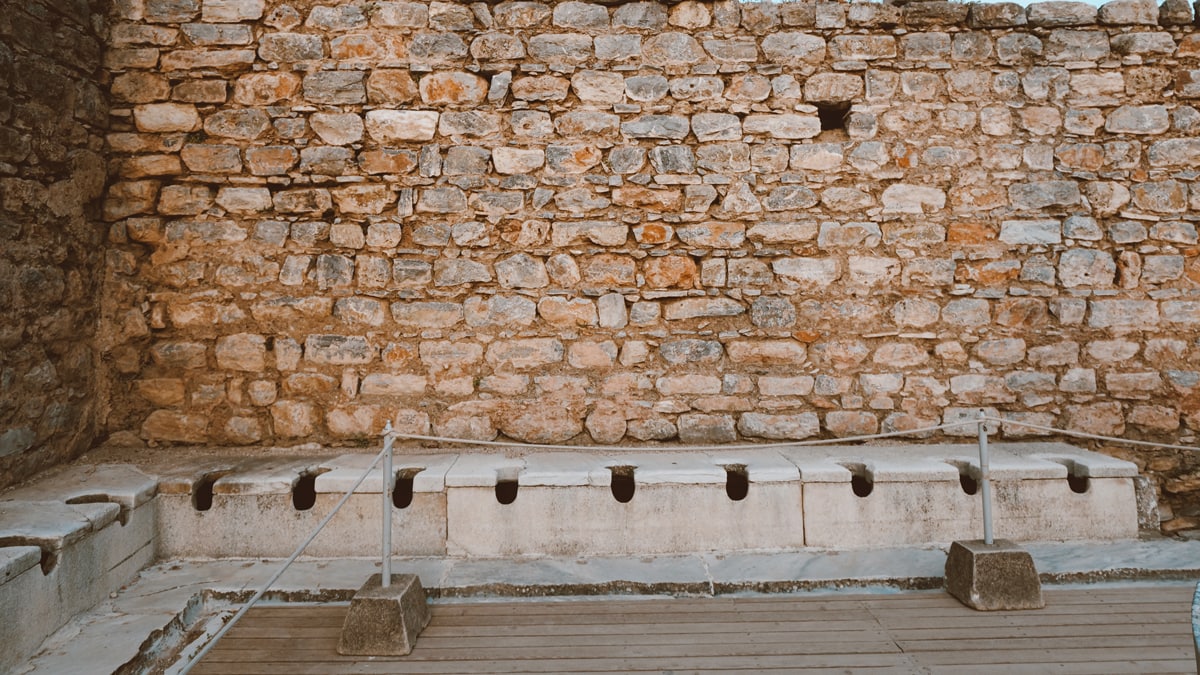
Public Toilet (Latrina)
Public toilets used by people of the period not only to relieve their toilet needs but also to socialize. Since the Scholastica Baths were right behind it and the waters of the bath merged with the sewage, masking bad odors was easier.
Scholastica Baths
Scholastica Baths is a large bath structure located on your right while going down from Curetes Street, the main street, thought to be built in the second half of the 1st century AD or at the beginning of the 2nd century. It is known that the baths were restored by a Christian woman named Skolastikia in the 400s AD. That's why it is named Scholastica Baths. It consists of 4 sections: hot water room, warm water room, cold water room and dressing room. It is also thought that the baths are connected to the latrina, i.e., the toilet, and the Love Houses (brothel of the period) with what secret passages.
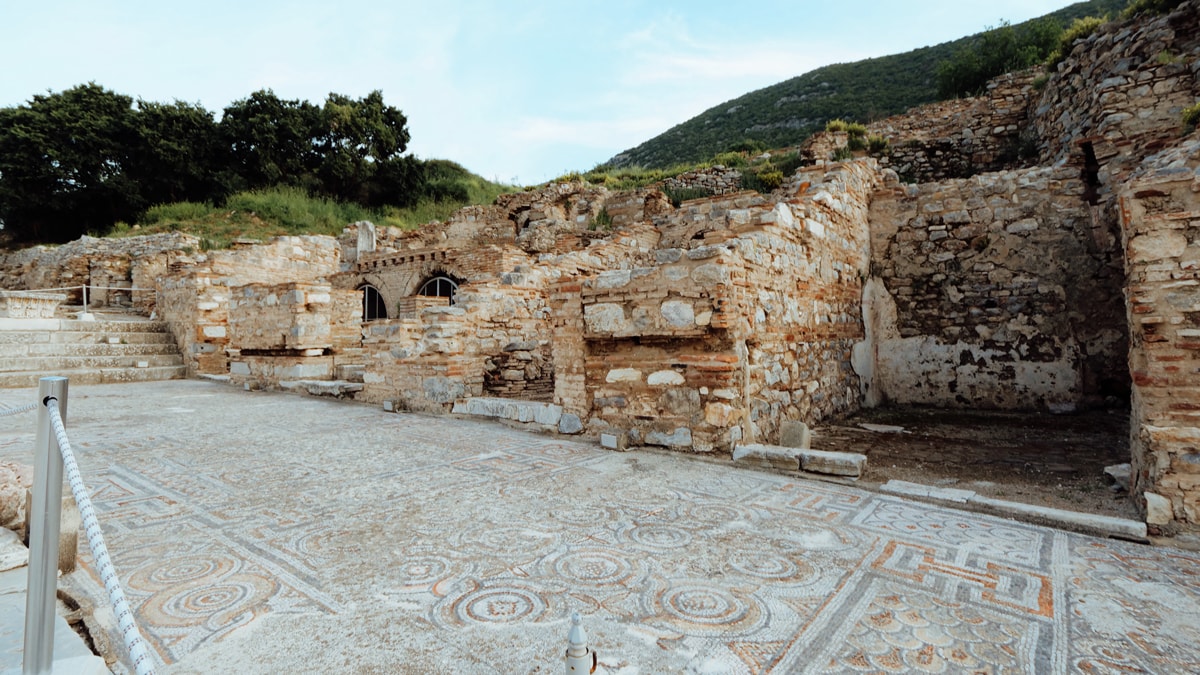
Mosaic Pavement
Opposite the Temple of Hadrian, there is this 5-meter wide mosaic pavement.
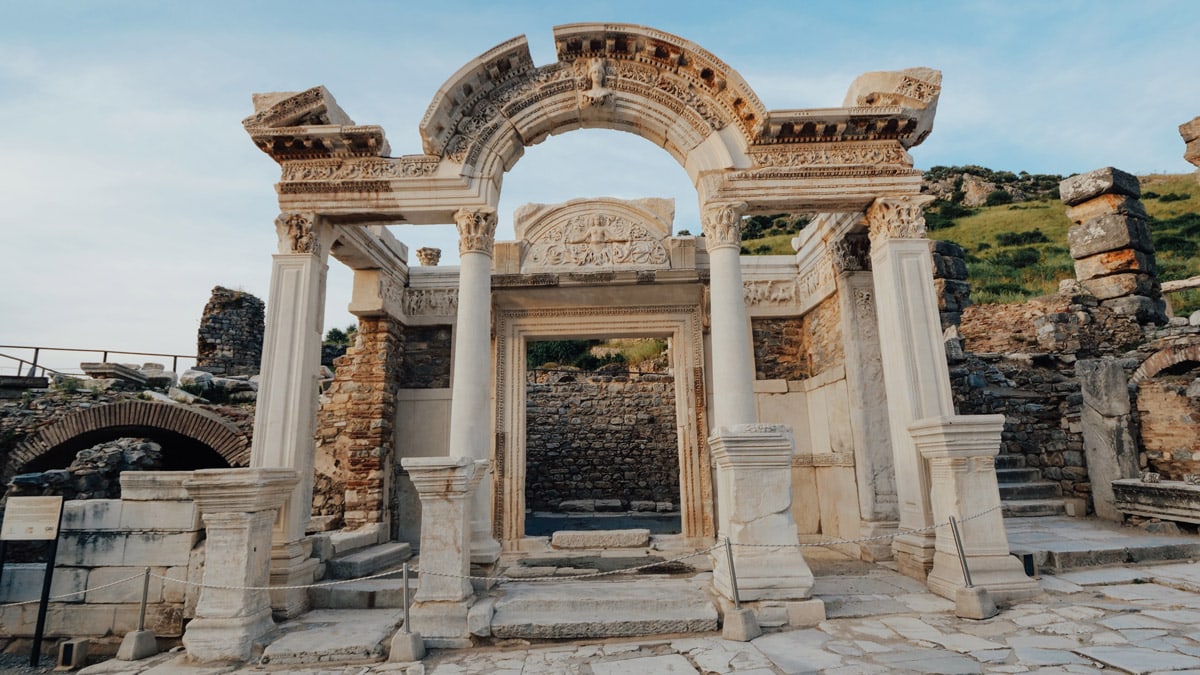
Temple of Hadrian
Temple of Hadrian is a temple built in the name of Roman Emperor Hadrian. The purpose of building the temple is to honor Emperor Hadrian who visited Ephesus in 128 AD. On its door, there are reliefs of the goddess of chance Tyche and Medusa. The reliefs of the temple are in the Ephesus Museum. On the pedestals standing in front of the temple, there were bronze statues of four Roman emperors Galerius, Maximianus, Diocletianus and Constantinus back in time.
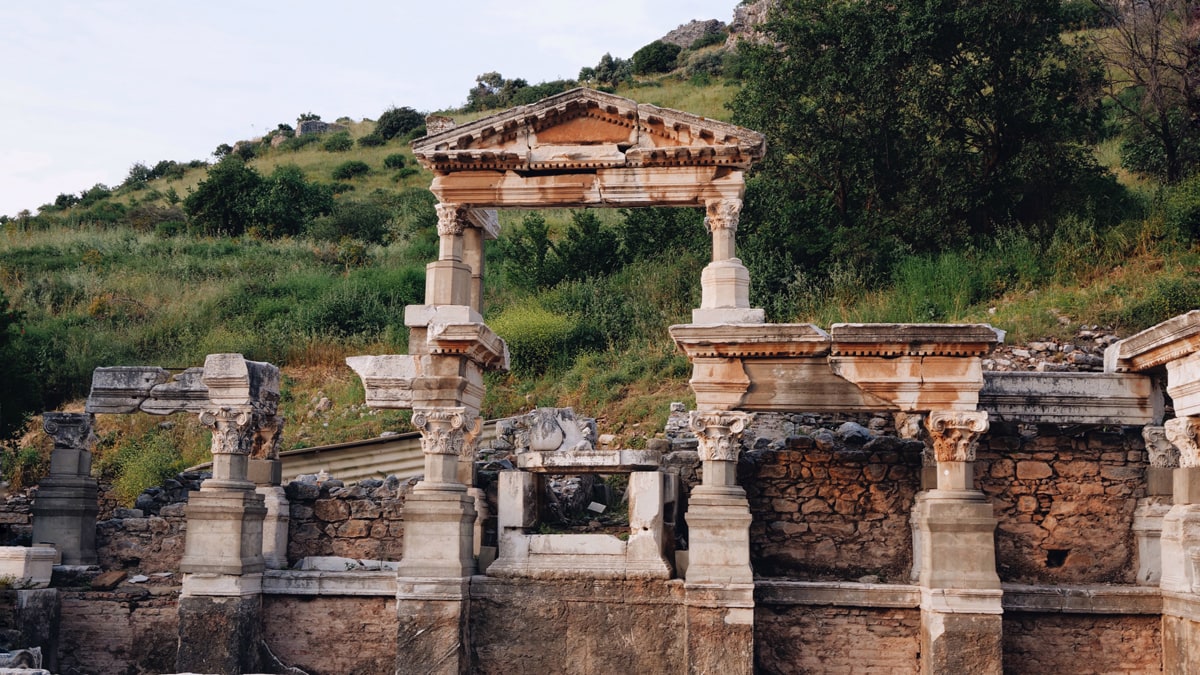
Trajan Fountain
Trajan Fountain is a fountain built between 102-114 AD in the name of Roman Emperor Trajan and Artemis of Ephesus. The fountain, which was actually 2-storied in its original, was rebuilt as single-storied by restoring. Some of the statues of the fountain are exhibited in the Ephesus Museum and some in the British Museum today.
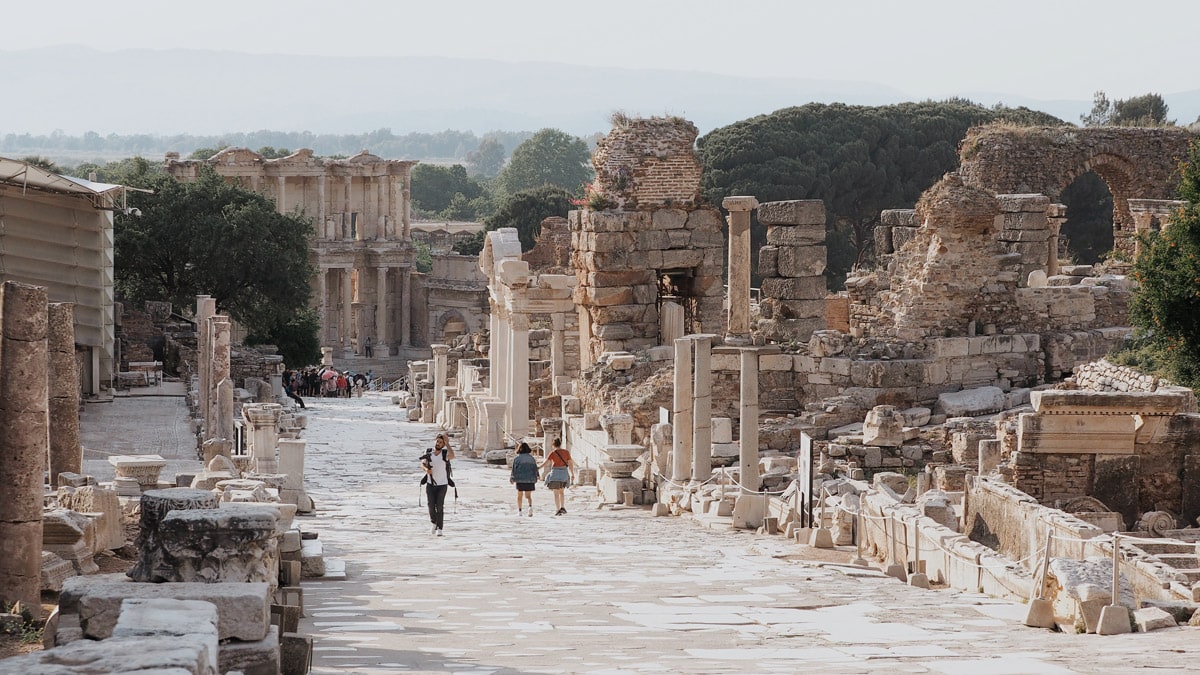
Curetes Street
The main street starting from the Gate of Hercules and going down to the Celsus Library is called Curetes Street. Trajan Fountain, Temple of Hadrian and Scholastica Baths are also located on this street. The reason why this street is called Curetes Street is based on mythology. The names of Curetes, mentioned as demigods in mythology, are written on the columns at the beginning of the street. That's why it is called 'Curetes Street'.
Gate of Hercules
The Gate of Hercules, built in the 4th century BC, takes its name from the reliefs representing 'Heracles' (Greek Mythology) i.e., 'Hercules' (Roman Mythology) on its front facade. This gate turns Curetes Street into a pedestrian way. However, it is known that only the nobles of Ephesus could pass through the gate.
Memmius Monument
Memmius Monument is an honorary monument built in the name of Gaius Memmius, one of the grandchildren of Roman statesman Sulla Felix, in the square where the Temple of Domitian is located in 30 AD. The monument is in the form of a tower and the virtues of Gaius Memmius are depicted between the columns of the tower.
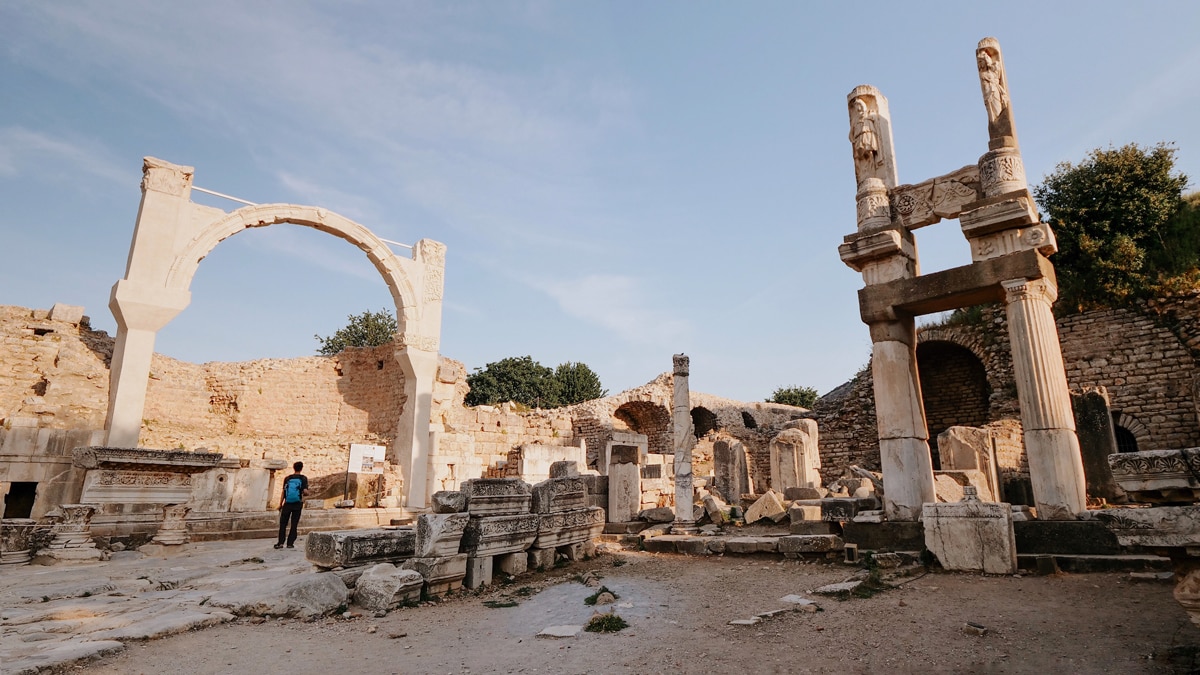
Temple of Domitian
Temple of Domitian, built between 81-96 AD, is a temple built in the name of Emperor Domitian. Emperor Domitian was cursed for ruling a cruel administration after his death. It was decided by the Roman Senate to erase his name from all inscriptions. However, the Ephesians did not want to destroy the temple completely and cut off the head of the emperor's statue in the temple and placed the head of his father's statue.
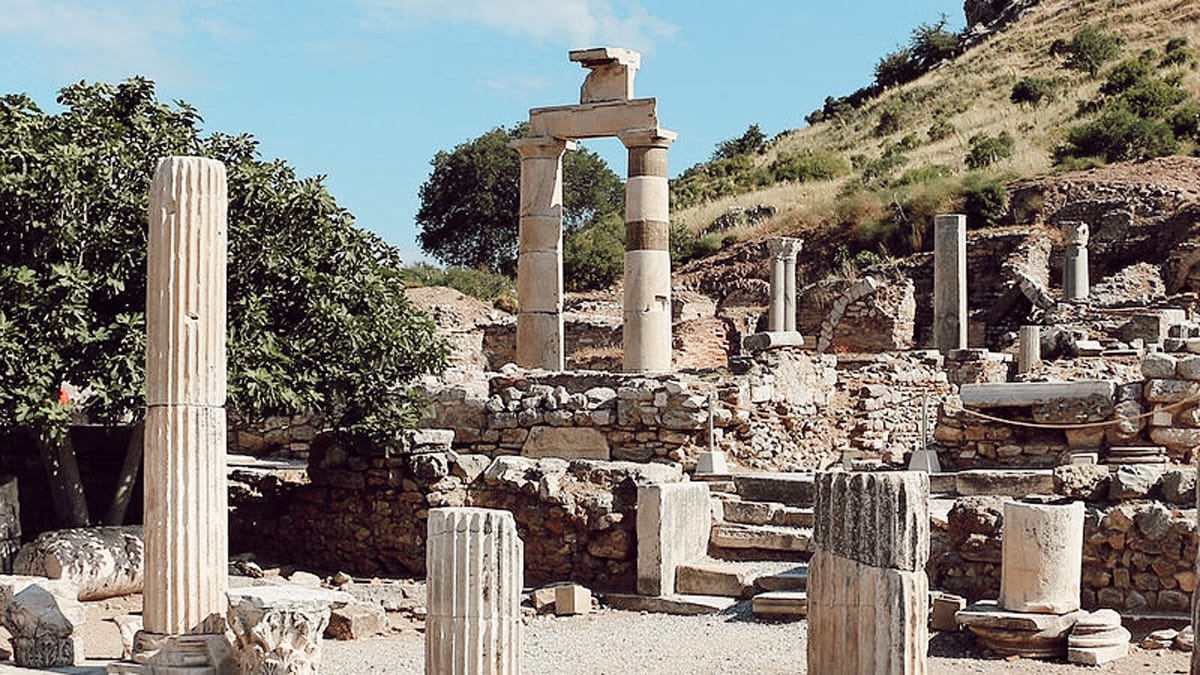
City Hall (Prytaneion)
Prytaneion, or City Hall, built in the 1st century AD, dates back to the period of Emperor Augustus. Matters regarding city administration were discussed and diplomatic relations were conducted here. The office of the highest executive of the city is also located here. In the third courtyard of the three-courtyard structure, there is a banquet hall.
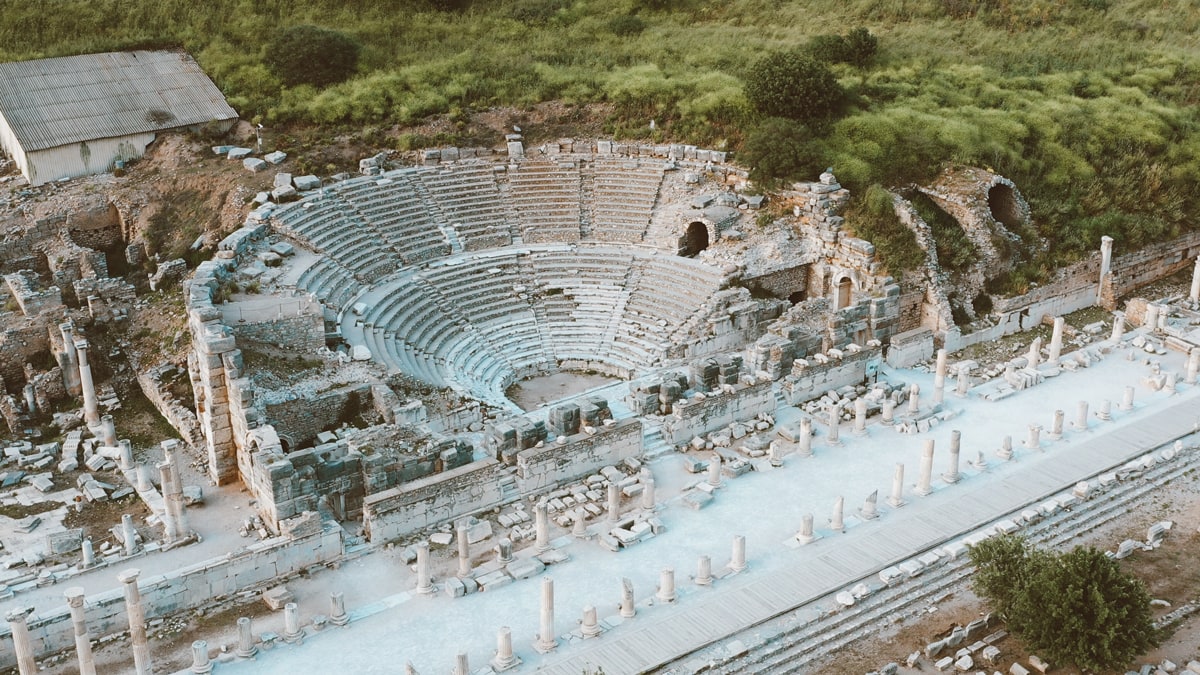
Odeon
One of the structures unique to Roman Ancient cities is odeons. We can say that odeons are the parliament where smaller groups gather, not massive like amphitheaters, especially where council members meet and make critical decisions about the future of the city. The odeon in Ephesus Ancient City also dates back to 100 AD.


Contribute